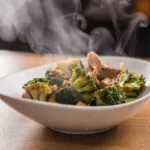
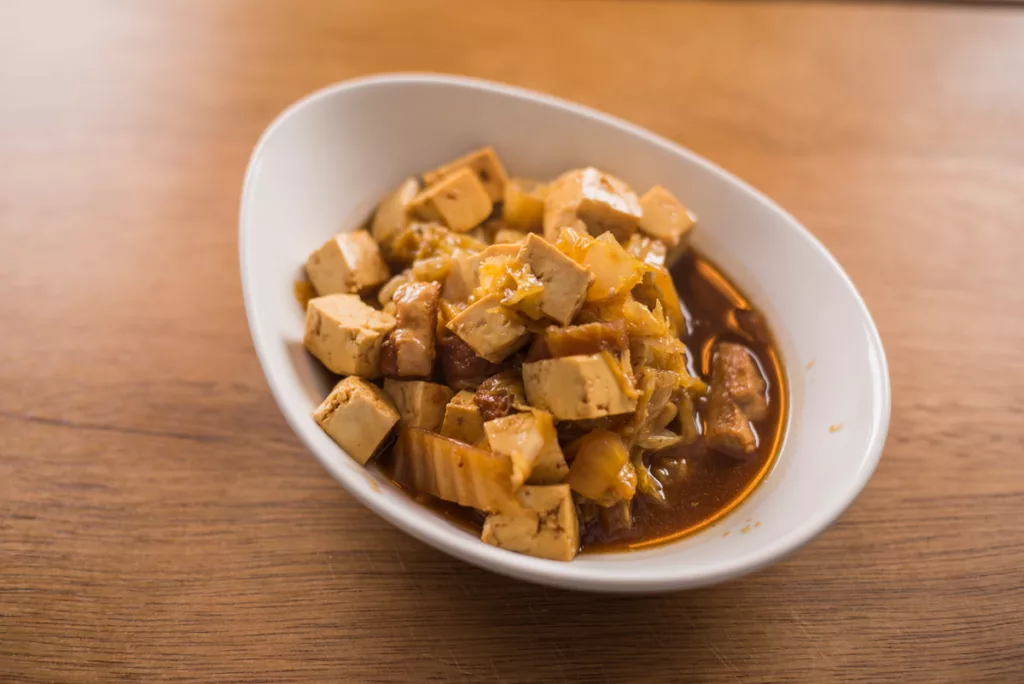
Chinese sauerkraut and pork belly stew is another one of my childhood staples, with a nice tangy sourness that compliments the richness of the pork belly, which melts into the rice with barely any effort thanks to the long cook time.
Although this dish takes at least a few hours to make as pork belly needs time to get to the proper texture, the prep and active cooking time is relatively short. So this is a good meal for people who work from home to prep and start during lunch to have ready by dinner time.
The Sauerkraut
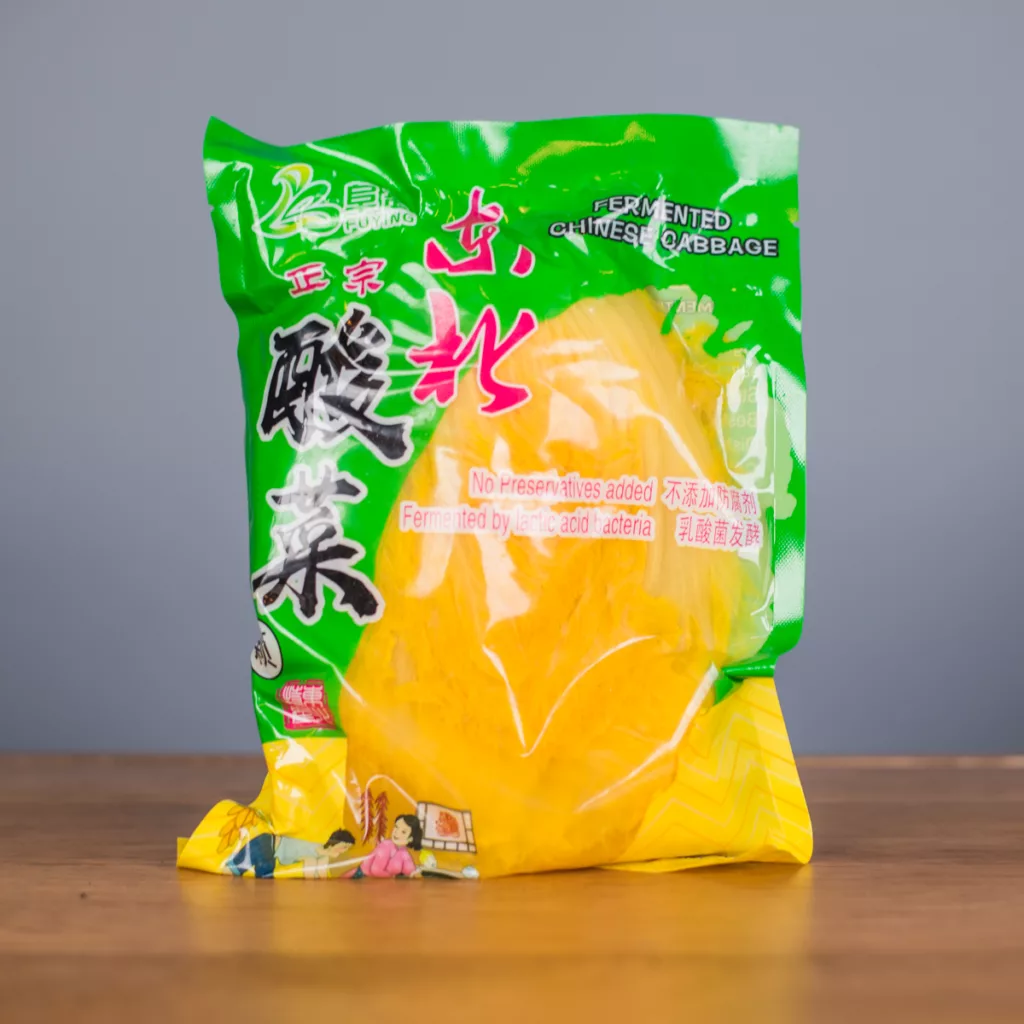
One of the key ingredient is Chinese sauerkraut, which can usually be found in Asian supermarkets or online Asian retailers in 2-pound packages. They come in both cut and uncut (shown above) forms, and either can be used.
Make sure you taste some before you start cooking, they are generally perfectly sour for this dish, but occasionally you might have a batch that’s a little too sour, in which case you’ll want to rinse and drain the sauerkraut before adding it.
The pork belly
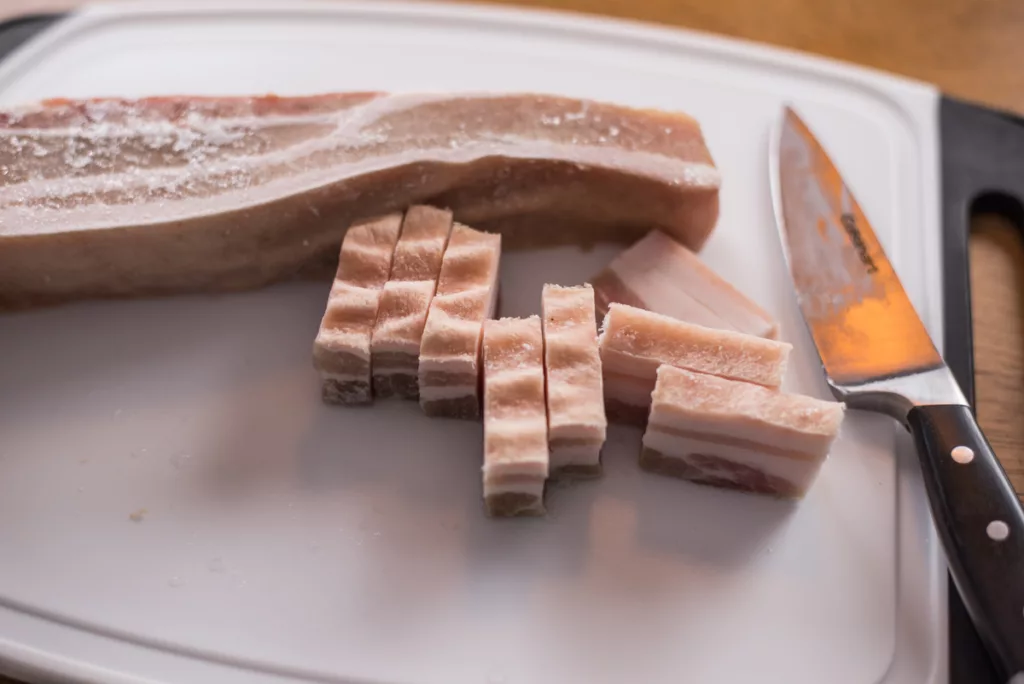
Some Chinese dishes that call for pork belly look for relatively lean or balanced pork belly, and using fatty pork belly is undesirable. That’s usually because the greasiness from pork belly that’s too fatty can get overwhelming very quickly – there’s even a specific Chinese word for it, ‘腻’.
This is not an issue for this dish, because the sourness of the sauerkraut balances out the fattiness of the pork belly even if highly fatty pork belly is used. And because we’ll be cooking it for hours, the fat melds into everything else in the stew, and whatever solid fat is left easily breaks down with a touch of a spoon at the end.
Here, I am slicing them into quarter-inch thick slices and searing them quickly to bring out some additional flavor. Pork belly also defrosts very quickly, and a sharp knife is more than enough to cut through partly defrosted pork belly strips, so this is a dish that can be made with very short notice.
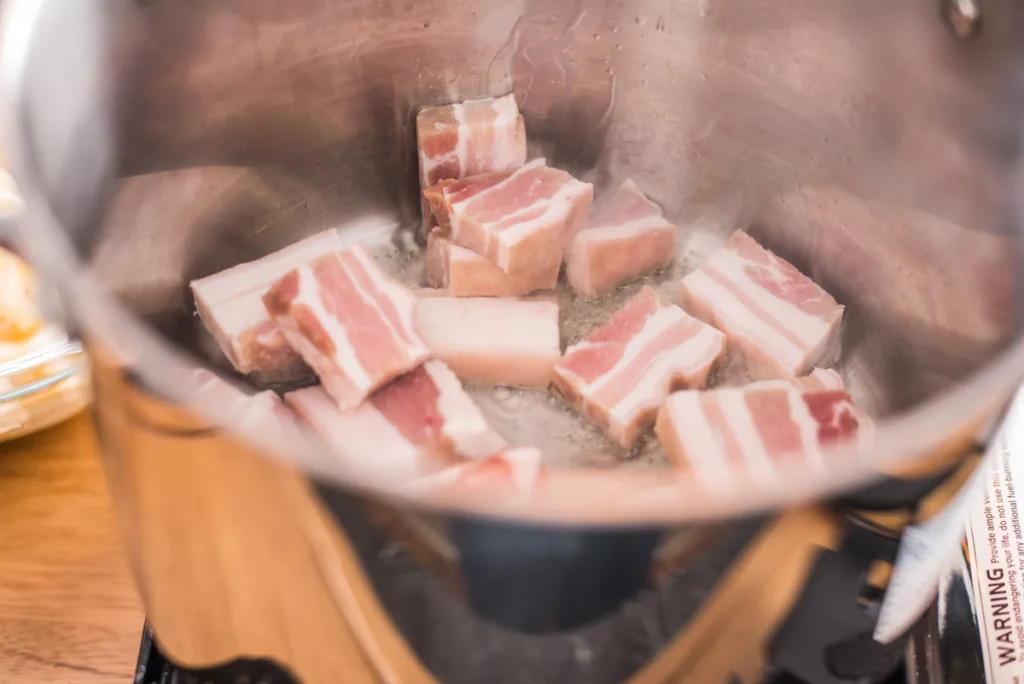
After searing the pork belly, add and cook off some shaoxing wine to add a layer of complexity to the final flavor, then add the Chinese thirteen spice and dark soy sauce for additional flavor.

Next, add the sauerkraut, any reserved sauerkraut liquid, and just enough water to almost cover all the solids unless you’re planning to add vermicelli later. Adding water to cover is fine if you’ll be adding vermicelli later, as the vermicelli will soak up a lot of liquid during cooking.
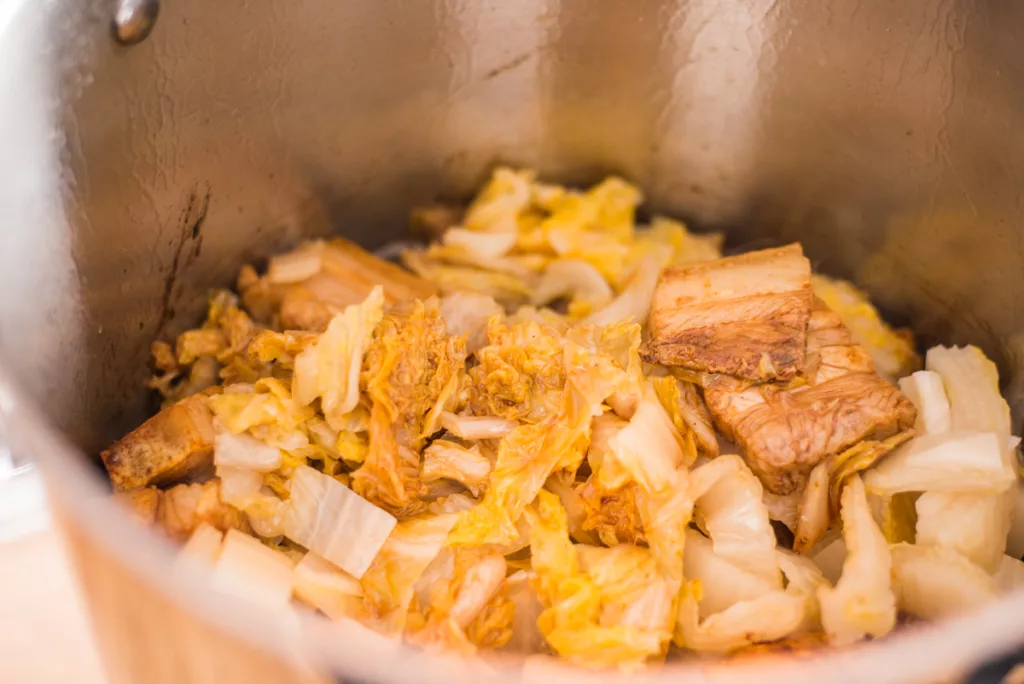


Then all that’s left is to bring everything to a boil and keep it at a simmer for a few hours, until the pork belly is almost tender enough to break apart at a touch. If you’re adding tofu or vermicelli, add them about an hour before serving.
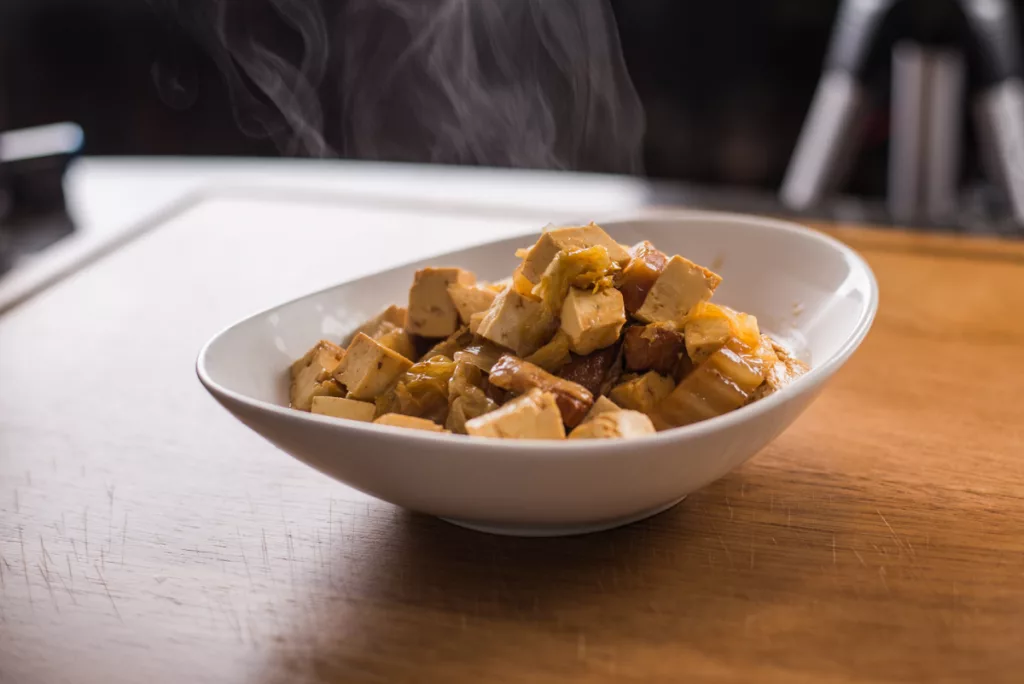

My favorite way to eat it (as with most Chinese stews) is as a messy 1:1 mixture with fresh basmati and the biggest spoon that fits in my mouth.
When you make this recipe, you’re also practicing the following techniques:
- Pan frying
- Braising
- Boiling
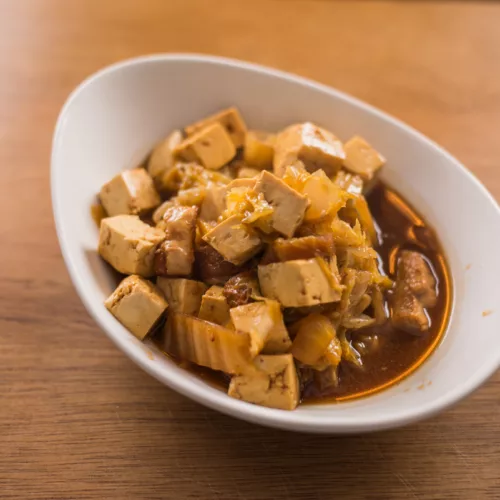
Chinese Sauerkraut and Pork Belly Stew
Ingredients
Key Ingredients
- 1.5 lbs Pork belly / this is the perfect dish to use fatty pork belly. Lean pork belly works as well but fatty works better.
- 2 lbs Chinese sauerkraut / pinyin 'suan cai', plain German barrel sauerkraut can be used if you can't find Chinese sauerkraut, but it'll be more expensive.
- 1 tbsp Chinese 13 Spice / five spice can work but may be more anise or cinnamon-forward depending on the mix that you use.
- 1/4 cup Shaoxing wine
- 2 tbsp Dark soy sauce with mushroom flavor / regular soy sauce if you don't have dark soy sauce
- 2 tsp Vegetable oil / or any high heat cooking oil
- Water
Optional Ingredients
- 1 lb Extra firm tofu
- 8 oz Sweet potato vermicelli
To Taste
- Salt
To Serve
- Cooked rice
Prepped Ingredients (for instruction reference only)
- Sliced pork belly
- Chopped sauerkraut
- Diced tofu
- Reserved sauerkraut liquid
- Soaked vermicelli
Instructions
Preparation
- Slice pork belly into 1/4" to 1/3" thick by 1 to 2" wide slices.1.5 lbs Pork belly
- If using whole sauerkraut, roughly chop them into 1/8" wide strips.
- Taste the sauerkraut, it should be pleasantly sour, bordering on almost too sour. If it's too sour to eat by itself, rinse the sauerkraut quickly in cold water and discard any liquid that may have been in the bag/jar. If it's tasty by itself, reserve the liquid that the sauerkraut came in.2 lbs Chinese sauerkraut
- If using, dice the extra firm tofu into 1/4" cubes about an hour before the end of cooking.1 lb Extra firm tofu
- If using, soak the sweet potato vermicelli in cold water starting about 2 hours before the end of cooking.8 oz Sweet potato vermicelli
Cooking
- Add the oil to a heavy bottom stock pot, and heat the pot over medium-high heat until oil is shimmering.2 tsp Vegetable oil
- Add the sliced pork belly in an even layer. It's fine if the pot is not big enough and there are multiple layers.Sliced pork belly
- Sear the pork belly until the first side releases naturally from the pan, approximately 4-5 minutes.
- Flip the pork belly to the other side, cook for another 4-5 minutes, it's okay if you don't get the same sear on the other side.
- Add the shaoxing wine to the pot, turn the pork to mix, and cook until some of the alcohol has been cooked off, about another 3-4 minutes.1/4 cup Shaoxing wine
- Add the Chinese 13 spice and dark soy sauce to the pot, turn the pork to mix.1 tbsp Chinese 13 Spice, 2 tbsp Dark soy sauce with mushroom flavor
- Add the chopped sauerkraut and any reserved sauerkraut liquid to the pot. Mix thoroughly.Chopped sauerkraut, Reserved sauerkraut liquid
- Add enough water to almost cover the solids (about 0.25"-0.5" less), cover the pot and bring to a boil over high heat. Then turn down to a simmer and cook for at least 3 hours, but up to 6 hours.Water
- If using vermicelli and/or tofu, add softened vermicelli about an hour before the end of cooking.Soaked vermicelli, Diced tofu
- Taste and adjust salt to season. It should be sour but not too sour. If it's not really sour at all, you can add some more plain sauerkraut to bump up the acidity.Salt
- Serve over white rice.Cooked rice