Making a basic chicken stock is one of the first things a beginner cook should master. The variations are infinite based on the seasoning used, and the barely cooked-through poached chicken is a great base for any chicken-based dish that calls for minimal cooking.
Many vegetables can be added to a chicken stock. Most European/American stocks call for onions and carrots, but I typically use only carrots since I like feeding the boiled vegetables to my dog as a treat, and dogs can’t eat onions.
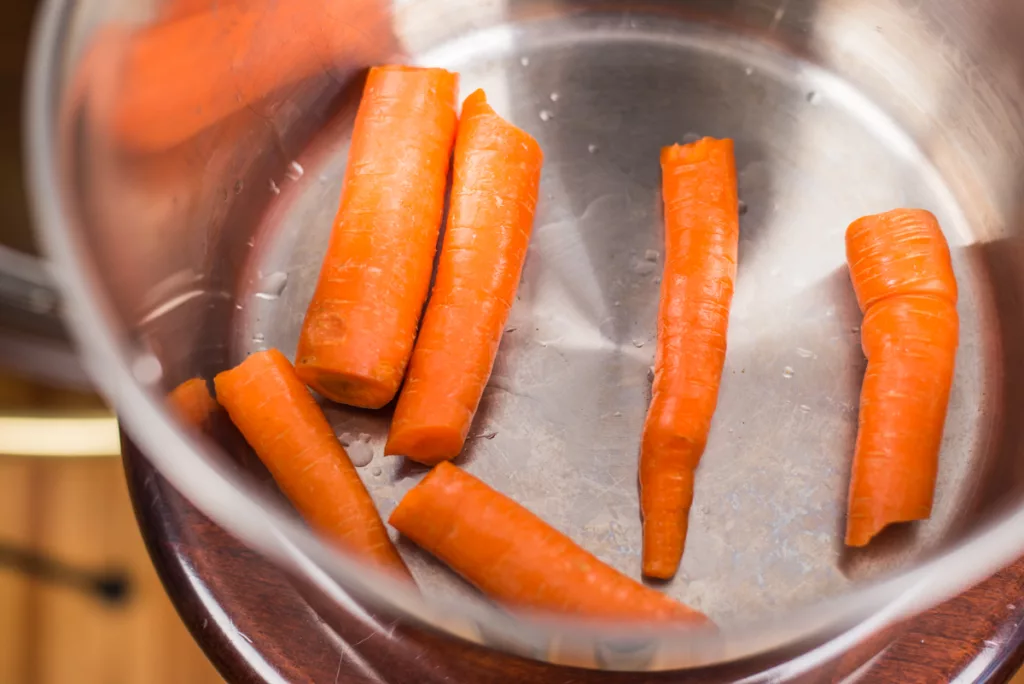
I line the bottom of the pot with the carrots to prevent the chicken from touching the pot directly. The high heat used at the start of cooking to bring the pot to a boil can overcook the part of the chicken touching the pot and cause it to stick at the same time. Having a layer of carrots prevents that issue.
I also take the skin off the chicken before cooking so that I don’t have to skim any fat off later on. The skin can be saved in the freezer and rendered separately in the oven to make chicken schmaltz and cracklings if wanted.
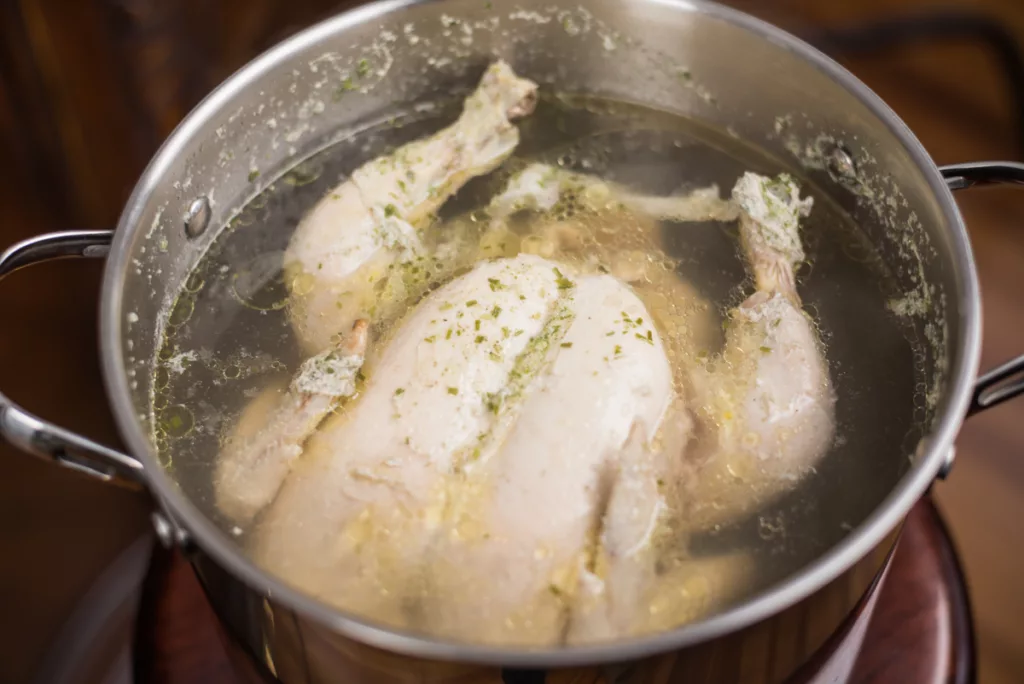
Then simply add the chicken, add enough water to barely cover, add your preferred seasoning blend or herbs and salt – I used to use Goya’s Sazonador Totale seasoning, but now I’m a converted Penzey’s Fox Point man – bring the water to a boil, then lower the heat down to a simmer, cover, and cook for about an hour until the chicken is cooked through.
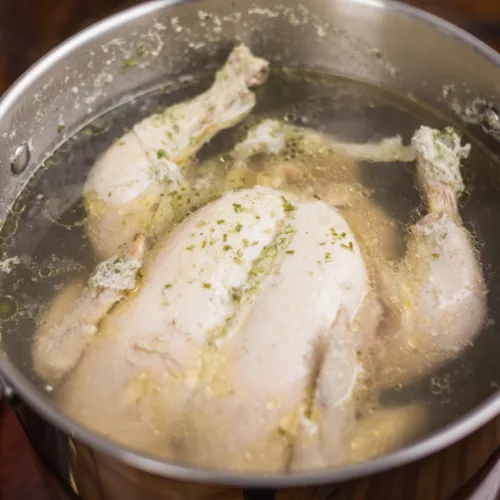
The perfect doneness is usually around when you can still pick up the whole chicken in one piece with tongs through the cavity, and the meat is starting to visibly separate from the bottom of the legs as seen above.
If the chicken falls apart when picked up, it is overcooked for our purposes, because we want the chicken just barely cooked so that we can cook it again later on without overcooking it.
At that point, I take the chicken and vegetables out of the stock, let the chicken cool a bit in the fridge until it’s okay to handle by hand, then remove the meat from the bones and tendon.
The meat will be saved and added back to the stock later, and also used in other multi-meal prep recipes where minimum cooking is needed. The carrots will be saved and fed to my dog.
I add the bones and tendon back to the stock, at which point it can continue to simmer for another 2-3 hours, up to 6 hours. At the end, I will filter the stock, discard the bones, and save the tendons and any pieces of meat in the stock for my dog as well.
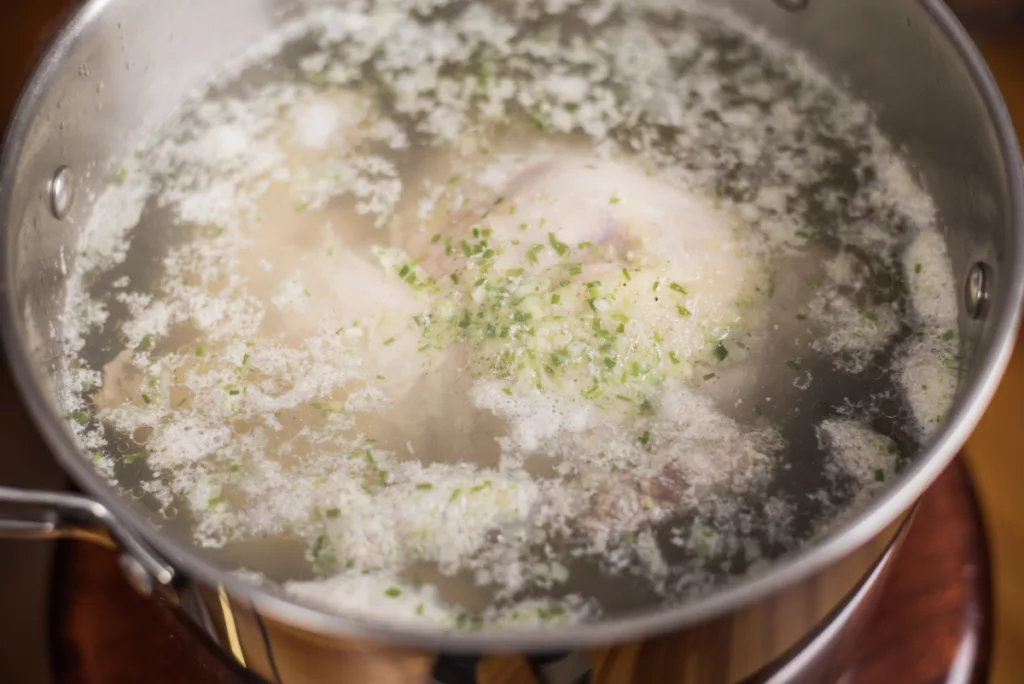
Cooking in an 8-quart stock pot, this approach usually yields about 4 quarts of light chicken stock that freezes beautifully in 16 to 32-oz deli containers, as well as ~3 lbs of poached chicken that can be used in a variety of multi-meal recipes. All for under $10 and under 15 minutes of active cooking.
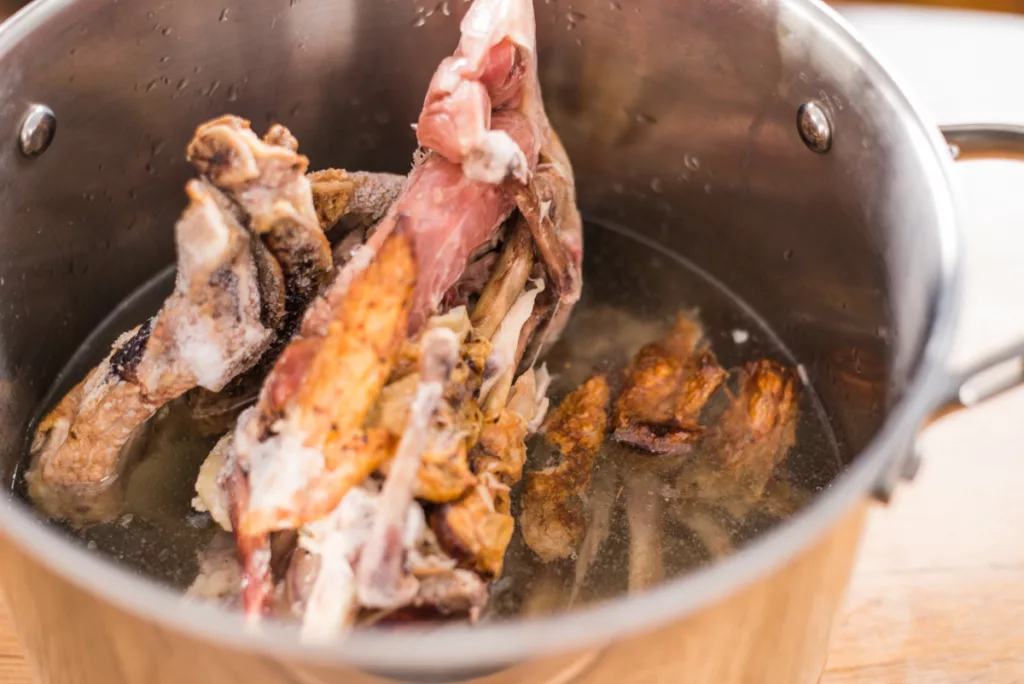
Instead of whole chickens, chicken bones from raw thighs and carcasses of roasted chickens can also be used. I usually use about two carcasses worth of bones in place of one whole chicken.
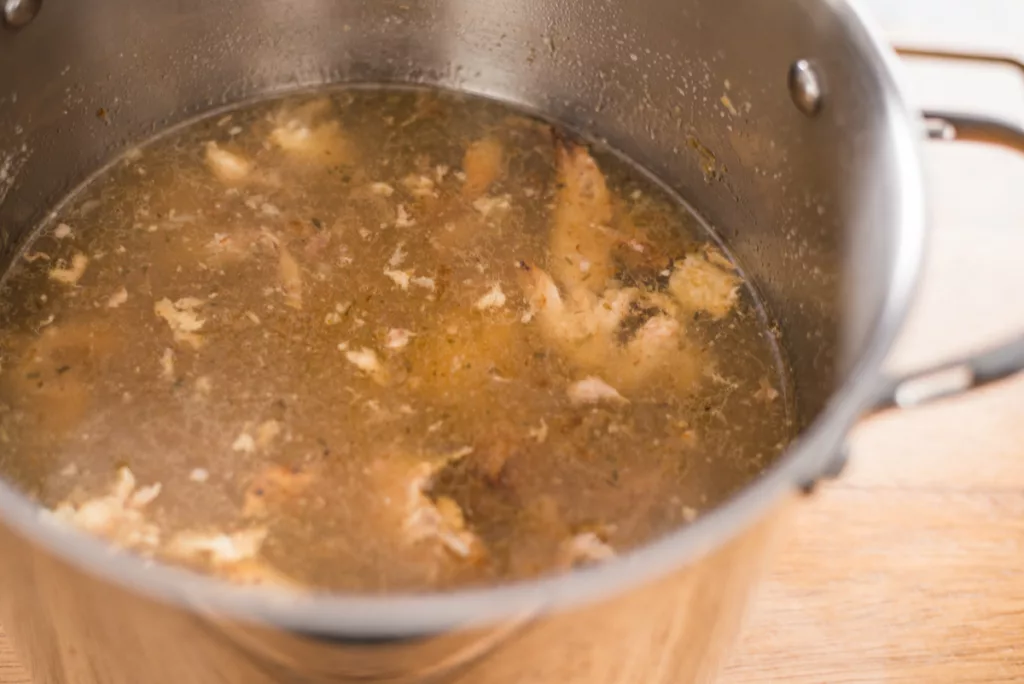
Although these approaches do not give you any meat, using only raw bones will give you a very flavorful light opaque stock, while using roasted chicken bones will give you a darker, cloudier stock that retains quite a bit of the roasted flavor. Both approaches will give you a stock that easily gels in the fridge.
Basics: Chicken Stock and Poached Chicken
Ingredients
Key Ingredients
- 1 Whole chicken / 4-5 lbs, chicken quarters, thighs or legs can also be used instead of whole chicken.
- 1 tbsp Italian herb seasoning blend / Use seasoning of your choice. I typically use Goya's Sazonador Totale, or Penzey's Fox Point seasoning for a lighter flavor.
- Water
Optional Ingredients
- 3 large Carrots
- 1 Yellow onion
Prepped Ingredients (for instruction reference only)
- Carrot chunks
- Quartered onion
- Giblets
- Bones & ligaments
Instructions
Preparation
- If using, roughly cut or break the carrots into 2-3 inch chunks.3 large Carrots
- If using, quarter or halve the onion.1 Yellow onion
- If using whole chicken, remove the giblets (internal organs that are either still in the chicken or were removed but replaced in the chicken's cavity in a paper bag).1 Whole chicken
- (Optional): Remove the skin from the chicken. This will result in a stock with barely any fat. Otherwise, typically 1/4 cup of fat is rendered from the skin of a whole chicken from boiling. The skin can be frozen and saved for rendering separately.1 Whole chicken
Cooking
- If using, add the carrot chunks to the bottom of a large stock pot (8 qt if using whole chicken, 5-6 might work if you're using chicken pieces).Carrot chunks
- Add the skinned chicken to the pot, if you're using carrots, make sure that the carrots instead of the chicken are directly touching the bottom of the pot. Add onions wherever they fit, if using.1 Whole chicken, Quartered onion
- (Optional): Add giblets to the pot, I typically add everything except for the liver (the smooth, flat organ) since that typically just breaks apart in the stock, but you can add everything or nothing if you want. If the neck is in the giblet bag, it should be added, though.Giblets
- Add water to cover the chicken, approximately 4-5 quarts for a whole chicken, cover the pot, and bring everything to a boil over high heat, approximately 20-30 minutes.Water
- Add seasoning of your choice, make sure to add some salt if you're using a saltless seasoning blend. Turn the heat down to low or medium-low to keep the stock at a high simmer with the lid on. There should be constant small bubbles breaking the surface.1 tbsp Italian herb seasoning blend
- Cook for 45 minutes to an hour, then remove the chicken and all solids from the pot.
- Let the chicken cool in the fridge for 15 to 30 minutes until it can be handled while wearing latex gloves, then remove the meat (and skin if it was not previously removed) from the bones and ligaments. The stock can be kept over low heat on the stock during this time.
- Reserve the meat. The carrots can be fed to your dog, but the onion and skin should be discarded.
- Add the bones and ligaments back to the stock, and continue cooking at a high simmer for ideally another 2-3 hours, up to 6 hours.Bones & ligaments
- Strain the solids out and store the stock in 16 to 32 oz deli containers. Freeze all portions that won't be used immediately. If they are being frozen in deli containers or souper cubes, they can go straight from freezer to pan with no noticeable loss in quality or taste, so there's very little to gain in putting the soup in the fridge.